Top Ad

Friday, December 30, 2005

Happy New Year


A very Happy New Year year to all the visitors of JazzHQ. It's just for fun, but I'm pleased that you found your way here and grateful if you've done it more than once. Best wishes to you all. Good health and peace in the new year.


Technorati tag:

Sony BMG Tentatively Settles Suits on Spyware

The music publisher Sony BMG Music Entertainment has reached a tentative settlement of lawsuits that accused it of violating consumers' rights and trading in malicious software.

Under the proposed settlement, lawyers said yesterday that Sony BMG would let some consumers receive free downloads to compensate them for Sony having surreptitiously included spyware on millions of CD's.

Lawyers said the deal would require Sony BMG to stop making compact discs with MediaMax software or with extended copy protection, or XCP, software that could leave computers vulnerable to hackers.

The proposed settlement was submitted to Federal District Court in Manhattan on Wednesday. A judge was expected to decide in January whether to tentatively approve it.

Under the settlement, Sony BMG, a venture of the Sony Corporation and Bertelsmann, will let consumers who bought the CD's receive replacement discs without the antipiracy technology and will let them choose one of two compensation packages.

The first package would allow consumers a cash payment of $7.50 and a promotion code allowing them to download one additional album from a list of more than 200 titles.

The second package would permit them to download three additional albums from the list. The court papers said Sony BMG would try to offer Apple's iTunes as one of the download services available to the consumers.

Those who bought MediaMax CD's would receive additional compensation.

Elizabeth C. Pritzker, a lawyer for the consumers, said the settlement provided for the compensation to be paid beginning as early as mid-January, even before the court grants final approval of the deal.

Sony began including MediaMax on some discs in August 2003 and introduced XCP in January. Both programs limited the number of copies of a disc that a user could make.

Beginning in November, more than 20 lawsuits were filed after a computer security research specialist a month earlier traced a hidden software program on his computer to an XCP disc he had bought and installed, the settlement said.

The Texas attorney general, Greg Abbott, had also sued Sony.

The company had said it had provided consumers with a one-click "uninstall" application that let them remove MediaMax.

AP - nytimes.com

Technorati Tags: , ,

Researcher: iPod earbuds could damage hearing

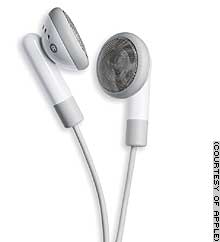
The earbuds commonly used by iPod listeners are placed directly into the ear.The ever-popular earbuds used with many iPods and other MP3 players may be more stylish than the bigger and bulkier earmuff-type headphones, but they may also be more damaging to one's hearing, according to a Northwestern professor.

"No one really knows for sure" the levels at which iPod users listen to music, but "what we do know is that young people like their music loud and seldom worry about any decline in hearing ability," Dean Garstecki, chairman of Northwestern's communication sciences and disorders department, told Reuters.

The earbuds commonly used by iPod listeners are placed directly into the ear and can boost the audio signal by as many as nine decibels -- comparable to the difference in sound intensity between an alarm clock and a lawn mower, Garstecki said.

Yet, the earbuds do not always fit snugly in the ear, but often allow background noise to seep in, which causes listeners to crank up the volume.

In turning up the volume to drown out background noise, however, people "don't realize they may be causing some damage" to their hearing, Garstecki said.

This danger is not confined to MP3 users, such as iPod owners. Earbuds are also used with compact disc players and Walkmans. Audiologists have cautioned about the potential risk of hearing loss associated with such devices since the 1980s.

The longer battery life and the greater music storage capacity of MP3 players, in comparison to Walkmans and compact discs, however, encourage longer periods of uninterrupted music listening.

"It's the combination of high intensity and long duration that creates the unique problem with the iPod," Garstecki said.

Various researchers have reported an increased risk of hearing loss associated with headphone use in the general population. Despite this, an MTV survey conducted earlier this year revealed that most teens and young adults do not think hearing loss from loud music is a big problem, even though over half of those surveyed said they experienced ringing in their ears after concerts.

When told that the loud music may lead to lifelong hearing loss, however, most of the survey participants said they would consider protective measures in the future.

Eliminating iPod earbuds in favor of larger earmuff-style headphones as one of those protective measures may be an unattractive option for many style-conscious music lovers. Instead, Garstecki recommends adherence to the 60 percent/30 minute rule.

Listeners should set their iPods and other MP3 players to sound levels that are no more than 60 percent of the maximum volume -- i.e. just over halfway between "off" and "maximum" volume -- and use their earbuds for no more than 30 minutes a day.

Those who use muff-style headphones at 60 percent volume can increase the duration to an hour a day, and those who listen at volumes significantly lower than 60 percent of the maximum can use their music players for many more hours.

Also, newer, more snug-fitting earbuds are "likely to be safer" if they prevent users from turning up the volume to eliminate background noise, Garstecki said.

"It's when you start cranking it up that you have to limit the dosage," he explained.

Noise-canceling headphones are another option for those who desire to listen to music for an extended period of time.

These devices, while a bit more costly and more visible than earbuds, partially or fully eliminate background noise so that users do not have to crank up the volume of their music for that purpose.


Reuters - CNN
Technorati Tags: , , , ,

Thursday, December 29, 2005

Smooth Jazz 2005 Year-End Chart ©


Position Artist Title (Label)
1 Nils Pacific Coast Highway (Baja/TSR)
2 Soul Ballet Cream (215)
3 Tim Bowman Summer Groove (Liquid 8)
4 Kenny G. Pick Up The Pieces (Arista/RMG)
5 Michael Lington Two Of A Kind (Rendezvous)
6 Dave Koz Let It Free (Capitol)
7 Boney James f/Joe Sample Stone Groove (Warner Bros.)
8 Steve Cole Thursday (Narada Jazz/EMI)
9 Paul Taylor Nightlife (Peak)
10 Euge Groove XXL (Narada Jazz/EMI)
11 Richard Elliot People Make The World Go Round (Artizen)
12 Chuck Loeb Tropical (Shanachie)
13 Mindi Abair Come As You Are (GRP/VMG)
14 Norman Brown Up 'N' At 'Em (Warner Bros.)
15 Marion Meadows Sweet Grapes (Heads Up)
16 Kenny G. f/Earth, Wind & Fire The Way You Move (Arista/RMG)
17 Paul Brown Moment By Moment (GRP/VMG)
18 Richard Elliot Your Secret Love (GRP/VMG)
19 Paul Hardcastle Serene (Trippin' 'N' Rhythm)
20 Wayman Tisdale Ain't No Stoppin' Us Now (Rendezvous)
21 Gerald Albright To The Max (GRP/VMG)
22 Chris Botti Back Into My Heart (Columbia)
23 Paul Jackson, Jr. Never Too Much (GRP/VMG)
24 Dave Koz Love Changes Everything (Capitol)
25 Norman Brown West Coast Coolin' (Warner Bros.)
26 Ken Navarro You Are Everything (Positive)
27 Brian Culbertson Hookin' Up (GRP/VMG)
28 George Benson Softly, As In A Morning Sunrise (GRP/VMG)
29 Jeff Lorber Ooh La La (Narada Jazz/EMI)
30 Paul Jackson, Jr. Walkin' (Blue Note/EMC)
31 Fourplay Fields Of Gold (RCA Victor/RMG)
32 Vanessa Williams You Are Everything (Lava)
33 Anita Baker How Does It Feel (Blue Note/Virgin/EMC)
34 Chris Botti No Ordinary Love (Columbia)
35 Queen Latifah California Dreamin' (Vector)
36 3rd Force Believe In Me (Higher Octave/EMI)
37 Euge Groove Get Em Goin' (Narada Jazz/EMI)
38 Walter Beasley Coolness (Heads Up)
39 Ray Charles w/Diana Krall You Don't Know Me (Concord)
40 David Sanborn Tin Tin Deo (GRP/VMG)
41 Pieces Of A Dream It's Go Time (Heads Up)
42 Hall & Oates I'll Be Around (U-Watch)
43 Seal Walk On By (Warner Bros.)
44 Kim Waters In Deep (Shanachie)
45 Anita Baker You're My Everything (Blue Note/Virgin/EMC)
46 Boney James Here She Comes (Warner Bros.)
47 Alicia Keys If I Ain't Got You (J/RMG)
48 Jonathan Butler Fire & Rain (Rendezvous)
49 Average White Band Work To Do (Liquid 8)
50 Peter White How Does It Feel (Columbia)
51 Mindi Abair Make A Wish (GRP/VMG)
52 David Pack You're The Only Woman (Peak)
53 Donny Osmond Breeze On By (Decca)
54 Wayman Tisdale Ready To Hang (Rendezvous)
55 Paul Brown Cosmic Monkey (GRP/VMG)
56 Marion Meadows Suede (Heads Up)
57 Joyce Cooling Camelback (Narada Jazz/EMI)
58 Pamela Williams Fly Away With Me (Shanachie)
59 Michael McDonald Tracks Of My Tears (Motown)
60 Kem I Can't Stop Loving You (Motown/Universal)
61 Jeff Golub Simple Pleasures (Narada Jazz/EMI)
62 Nelson Rangell Don't You Worry 'Bout A Thing (Koch)
63 Marc Antoine Madrid (GRP/VMG)
64 Alexander Zonjic Leave It With Me (Heads Up)
65 Chieli Minucci The Juice (Shanachie)
66 Greg Adams Firefly (215)
67 Brian Simpson It's All Good (Rendezvous)
68 Boz Scaggs Lowdown (Unplugged) (Virgin)
69 Rick Braun Shining Star (Artizen)
70 Mariah Carey We Belong Together (Island/IDJMG)
71 Boney James 2:01 AM (Warner Bros.)
72 Warren Hill Still In Love (Popjazz/Native Language)
73 Acoustic Alchemy Say Yeah (Higher Octave/EMI)
74 Michael McDonald I Heard It Through The Grapevine (Motown)
75 Matt Bianco f/Basia Ordinary Day (Decca/Universal)
76 Adani & Wolf Daylight (Rendezvous)
77 Kim Waters Steppin' Out (Shanachie)
78 Def Jazz f/Gerald Albright Hey Young World (GRP/VMG)
79 Dido White Flag (Arista/RMG)
80 Camiel I'm Ready (Rendezvous)
81 Joyce Cooling Daddy-O (GRP/VMG)
82 Peter White Dreamwalk (Columbia)
83 Michael Buble Home (143/Reprise)
84 Pieces Of A Dream Night Vision (Heads Up)
85 Russ Freeman East River Drive (Q/Atlantic)
86 Steve Oliver Chips & Salsa (Koch)
87 Soul Ballet She Rides (215)
88 Chuck Loeb Pocket Change (Shanachie)
89 Peter White Turn It Out (Columbia)
90 Marcus Miller f/Eric Clapton Silver Rain (Koch)
91 Tha' Hot Club I'm Gonna Love You Just A Little More Baby (Shanachie)
92 Renee Olstead A Love That Will Last (143/Reprise)
93 Richard Smith What'z Up? (A440)
94 Eric Marienthal Lefty's Lounge (Peak)
95 Herbie Hancock f/John Mayer Stitched Up (Hear Music/Vector)
96 Gregg Karukas Riverside Drive (N-Coded)
97 Everette Harp Can You Hear Me (A440)
98 Kirk Whalum Any Love (GRP/VMG)
99 Nils Summer Nights (Baja/TSR)
100 Najee 2nd 2 None (Heads Up International)

Visit radioandrecords.com to view the latest complete Smooth Jazz ® National Airplay© listings.

Technorati tag:

Wednesday, December 28, 2005

New York probes price-fixing in digital music

New York State investigators are investigating whether there is illegal price-fixing in the price of digital music services.

State Attorney General Eliot Spitzer has subpoenaed several major music companies about the wholesale prices they charge for digital files.

A spokesman for his office said the investigation was at a preliminary stage and it could be months before prosecutors decide whether a full investigation is warranted.

Wholesale digital music prices can range from 60 cents to nearly 90 cents US a song, according to industry executives. Operations such as Apple Computer Inc.'s iTunes, the most popular digital music source, then sell songs to users for 99 cents per download.

The New York investigation came to light after Warner Music Group Corp. made a regulatory filing that announced it has received a subpoena from state investigators.

Warner Music said it is co-operating fully and that the investigation is "industry-wide."

Apple chief executive Steve Jobs publicly criticized music companies in September over their pricing policies. As companies renew their contracts with Apple, they are seeking to force wholesale prices higher. Jobs said if Apple has to raise its prices, consumers will do more illegal downloading.

Recording companies also are pressing for variable pricing in digital downloads. They want songs from popular artists such as Green Day to fetch more than those of lesser acts.

Warner Music chief executive Edgar Bronfman Jr. has said Apple has to recognize that not all songs are the same commercially, so they should not be priced the same.

This is not the first time Spitzer, who plans to run for state governor in 2006, has taken on the music industry. Earlier this year his office probed lavish gift-giving by recording companies to radio station employees in an attempt to influence playlists.

In November, Warner Music agreed to pay $5 million US and Sony BMG agreed to pay $10 million US to settle that charge. EMI and Universal are still being investigated.

In 2000, several states and Canada co-operated to investigate allegations price-fixing in the cost of compact discs.

cbc.ca


Technorati Tags: , ,

Tuesday, December 27, 2005

Music to make time pass in a bunker

Although a piece of music may be indisputably praiseworthy, it is possible that you'd rather not have to hear it too often - a syndrome that led Mark Twain to say Richard Wagner's music is not as bad as it sounds.

Imagine that King Kong has destroyed your city. You must take to the bunker. No telling how long you'll be down there. You do not want to be stuck with exasperating music. The following is a baker's dozen choice of jazz and rock recordings - some of them may be hard to find - that are guaranteed to wear well. In fact, they will sound better and better. They used to be called desert island records.

Lucky Thompson, "Lucky Strikes" (Prestige): To be able to continue being heard day after day, music must be of superior intellect, cliché-free and listener-friendly, like "Lucky Strikes," an overlooked jewel. At his best, the smoothly adventurous saxophonist Thompson was as good as anybody. (Hank Jones, piano; Richard Davis, bass; Connie Kay, drums.)

Steely Dan, "Gaucho" (MCA): Like the Bilbao Guggenheim, this is a rare modern product that is anything but ugly, cheap or ostentatious. With its ironic lilt, poetic lyrics, loose swing and appropriate technology, "Gaucho" is a high point of the music of our times.

Duke Ellington and John Coltrane, "Take the Coltrane" (Impulse): The inspiration flows back and forth as the rhythm sections of Ellington (Aaron Bell and Sam Woodyard) and Coltrane (Jimmy Garrison and Elvin Jones) alternate. It adds up to one good illustration of the infinite variety of a groove.

"Gotta Serve Somebody, the Gospel Songs of Bob Dylan," (Columbia): When interpreted by gospel singers such as Sounds of Blackness, Mavis Staples and Shirley Caesar, the born-again songs of Bob Dylan are taken to another level. The best African-American covers of Dylan songs since Jimi Hendrix.

Zoot Sims, "For Lady Day" (Pablo): Songs associated with Billie Holiday interpreted by the white Lester Young par excellence, with the eccentric Jimmy Rowles on piano, George (the Bad Czech) Mraz on bass and Jackie Williams on drums. When Sims was asked how he could play so well when he was drunk, he replied: "I practice when I'm drunk."

Marvin Gaye, "What's Going On" (Motown): The angelic melodies with pleading faux-naïve ("save the babies") lyrics, combined with exquisite bass lines by James Jamerson and a solid Detroit groove by the Motown house band.

Gil Evans (Featuring Cannonball Adderley), "New Bottle Old Wine" (Pacific Jazz): "King Porter Stomp," "Struttin' With Some Barbeque," "St. Louis Blues" and other traditional songs are streamlined and reinforced in this recording without disturbing the foundations. Evans's playful dissonance and ambitious pecking schemes are well rehearsed for once. You can't go wrong with Art Blakey on drums, and Adderley is majestic.

Marianne Faithfull, "Broken English" (Island): Paradise on the wings of despair.

Sonny Rollins, "The Bridge" (BMG): Marking the end of a premature retirement punctuated by frequent night practicing on an East River bridge, the "Saxophone Colossus" came back with a roar. That's thanks in large part to the collaboration of the thinking man's guitar player, Jim Hall.

The Rolling Stones, "Sticky Fingers" (Virgin): Gets the blood flowing, the mind racing and the fingers popping. You can eat it as well as listen to it. Both familiar and rejuvenating, it is perfect music, for instance, for writing articles.

"Relaxin' With the Miles Davis Quintet" (Prestige): The tension generated by Paul Chambers's bass walking right on top of the time in tandem with Philly Joe Jones's fourth-beat rimshot laid back on it makes this one of Davis's triumphs as a casting director, with Coltrane on saxophone and Red Garland on piano.

Leonard Cohen, "The Future" (Columbia): A downer is required from time to time to keep track of what "up" is like. Cohen takes you to where he wants to go, he tucks you in - it's his trip.

"Thelonious Monk Plays Duke Ellington" (Riverside): Childlike versions of sophisticated songs that marry consonance with dissonance and the humorous with the profound. (Oscar Pettiford, bass, and Kenny Clarke, drums.)

This article is the first in a two-part series.
By Mike Zwerin Bloomberg News - iht.com

Technorati Tags: , ,

In Iran, listening to Kenny G. is now an act of rebellion

Kenny G.'s music is indecent?!

First they came for Kenny G., and I did not speak out . . .


Kenny G.'s music is indecent?! There's a bit of news that may have snuck in under your radar this last week during the holiday rush. Iranian President Mahmoud Ahmadinejad banned western and "indecent" music from the airwaves of his country's TV and radio stations. Some artists singled out for criticism were Eric Clapton, George Michael and smooth-jazz artist Kenny G.

Kenny G?

I'm quite certain that there are many homes and business establishments in Richmond where a voluntary ban on Kenny G. exists. I doubt, however, that such bans are in place because of the man's inherent "indecency." The worst thing that happens to me when I've heard that blowhard - I mean saxophonist - is the persistent feeling that I'm stuck in a dentist's office. I'll look down and imagine seeing months-old issues of Time, Sports Illustrated and People magazines. I never feel like the soprano sax is going to shred my moral fiber.

Generally one has to push the limits a bit beyond circular breathing and duets with Michael Bolton to attract the attention of our own politicians. The 2-Live Crew, Ice-T's "Cop Killer" (especially ironic since he's a regular on "Law & Order") and the "hot-coffee" patch in Grand Theft Auto couldn't even do the trick. This is a fact that I'm rather thankful for as we approach the end of the year. The worst I'd have to endure for purchasing a CD is the ridicule of my friends and coworkers. I never have to worry that a "Promotion of Decency and Prevention of Vice" squad is going to raid my apartment for an embarrassingly large collection of Rush CDs. And you can have my Sergio Mendez and Brasil '66 albums when you pry them from my cold, dead fingers.

One artist that I suspect won't be banned from Iran is The Grateful Dead. Why's that? Here's a quote from the Radio Free Europe archive:

"[Iranian president] Ahmadinejad said that someone present at the UN told him that a light surrounded him while he was delivering his speech to the General Assembly. The Iranian president added that he also sensed it.

"He said when you began with the words 'in the name of God,' I saw that you became surrounded by a light until the end [of the speech]," Ahmadinejad appears to say in the video. "I felt it myself, too. I felt that all of a sudden the atmosphere changed there, and for 27-28 minutes all the leaders did not blink."

Ahmadinejad adds that he is not exaggerating.

"I am not exaggerating when I say they did not blink; it's not an exaggeration, because I was looking," he says. "They were astonished as if a hand held them there and made them sit. It had opened their eyes and ears for the message of the Islamic Republic."

Do you think he mixed the electric Kool-Aid himself?

I suspect that once you think you can change political opinion by banning George Michael or Eric Clapton, you're not very far away from thinking that your citizenry won't laugh if you say you were suffused with white light at the UN. I wonder who will be next? Will the country survive the brutal suppression of Enya, Yanni and Zamfir? Will the Trans-Siberian Orchestra be branded an agent of Russian imperialism?

There is hope, however, for adult contemporary music in the Islamic Republic. My Iranian ex-pat friends tell me that just about anything is available at the country's bazaars. Persian smooth-jazz fans will still be able to get the latest from David Sanborn, Candy Dulfer or anyone else on the black market.

The only difference is that listening to Kenny G. now is an act of rebellion.

That's all for now . . . We hope you enjoyed your holiday and look for Plan 9's Top 9's of 2005 later this week!

The Music Channel Brian Larson - richmond.com

Technorati tag:

Brazil Brazil | Promo Video

Click here to view the video
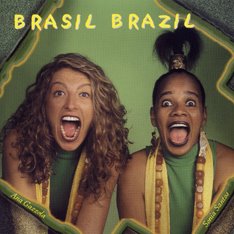
Click on picture to view the video

BRASIL BRAZIL features internationally-renowned singers Ana Gazzola and Sonia Santos who, with their 7-piece band, deliver the fervor, enthusiasm and excitement of popular Brazilian music - tinged with jazz and spiced with strong Latin and African rhythms.

Offering the best-known standards of classic and contemporary Brazilian Jazz, Ana, Sonia and their band perform musical arrangements that present all the rhythms and faces of this colorful and tropical culture. With some of the best musicians from the North and South of Brazil performing on a variety of unique, authentic instruments, audiences are both entertained and educated about this South American country.

Based in Los Angeles since 1991, Brasil Brazil has toured to many of this country's top festivals and venues, including the Syracuse Jazz Festival, the Ford Detroit International Jazz Festival, BrazilFest at Lincoln Center Out-of-Doors (NYC), Pepperdine University, El Camino College, Napa Valley Opera House, and the Hollywood Palladium.
Singer: Ana Gazzola
Singer: Sonia Santos

Technorati tag:

Monday, December 26, 2005

An Evening of Jazz Guitar

Jack Kleinsinger's “Highlights in Jazz, ” New York's longest running jazz series, announced their next series concert Thursday, January 5, 2006 “An Evening of Jazz Guitar” feat. Bucky Pizzarelli, Russell Malone, Gene Bertoncini, Frank Vignola with special guests Jay Leonhart and Wycliffe Gordon. This concert will be the only time these four guitarists will appear together on stage in New York City and a rare opportunity to hear these greats in a very special evening of Jazz Guitar.

Throughout the history of jazz the guitar has played a prominent role from it's earliest beginnings with Lonnie Johnson to Charlie Christian, Wes Montgomery, George Benson and Pat Metheny.

“For more than half a century seven-string plectrist Bucky Pizzarelli has been part of the fraternity of musicians who have kept mainstream and traditional jazz alive. The list of big bands and vocalists with whom Bucky has performed and recorded reads like a veritable Who's Who of Jazz. Bucky Pizzarelli is a superior guitarist who swing musicians in particular appreciate. Bucky Pizzarelli, father of John Pizzarelli, Jr., has been a fixture in jazz and the studios since the early '50s.

Russell Malone, a former student of Bucky Pizzarelli, has firmly established himself along side the guitar greats with his swift, clean and tasteful ballard playing. After stints with Jimmy Smith, Harry Connick, Jr. and Diana Kral he embarked on a solo career recording critically acclaimed albums for Columbia, Verve and MaxJazz.

Gene Bertoncini has had a long career in jazz going back to the 60s where he played on many studio recordings and in the TV orchestras of Merv Griffin and Skitch Henderson. He is an elegant, tasteful, and sensitive guitarist who can blend classical, jazz, latin and popular material and has appeared on many popular CDs as a leader with his own groups.

An extremely versatile jazz guitarist, Frank Vignola has demonstrated that he is capable of playing everything from fusion and commercial pop-jazz to hard bop, post-bop, and swing. The native New Yorker has a wide variety of influences; everyone from Les Paul, Wes Montgomery, Joe Pass, and Pat Metheny to Django Reinhardt and Charlie Christian and of course his long-time associates Bucky Pizzarelli and Howard Alden all of whom have influenced his playing.

Rounding out the program are the superior bassist, Jay Leonhart who has also had a parallel and sometimes overlapping career as a witty lyricist and occasional singer. Another Highlights regular, the trombonist Wycliffe Gordon, is best known for his work with the Lincoln Center Jazz Orchestra. The versatile trombonist can scat, multi-note, slide, and plunge, just like he stepped out of the 1930s. Jay and Wycliffe recently debuted their duo at Dizzy's in New York City. There will be special surprise guests on this show!

Technorati Tags:

Making a Trumpet an Agent of Change

The trumpeter Miles Davis from the 1970 Cellar Door sessions.
Miles Davis
"The Cellar Door Sessions, 1970" (Sony Legacy)

Except to the few jazz experts who have looked at it aerially and mapped it out, Miles Davis's first electric period, from 1969 to 1975, feels like a dark labyrinth, or a frustration dream. He worked hard, and created a body of recorded work that was caustic, unrecognizable, spooky. In spots, the passageways become tiny and dark; waves of musicians, hired for an hour or a month or a year, fade in and out, all subsumed by rhythm. The sound balloons, growing dense and disjunctive and bluntly repetitive, and then winnows down to an ominous rustle.

But "The Cellar Door Sessions, 1970," a new six-CD box set full of live Miles Davis music, represents a stretch when Davis was making organic, linear music. It is six musicians in a working band, making sense of a new paradigm on a nightclub stage in Washington, from a Wednesday to a Saturday. Along with Davis on trumpet, they are the keyboardist Keith Jarrett, the saxophonist Gary Bartz, the bassist Michael Henderson, the drummer Jack DeJohnette and the percussionist Airto Moreira. By the end of the week, joined by the guitarist John McLaughlin, the band grows to seven.

About 80 minutes of this music was used on the 1971 album "Live-Evil," and the rest appears here for the first time. The performances follow the principles of jazz as we all know it, with rigorous collective improvisation building up arcs of tension. But the sounds and the rhythms connote another discipline altogether: electric funk, shocked and altered through wah-wah and distortion pedals.

One of the assumptions that Davis was stepping on - with help from his producer, Teo Macero - was that there needed to be a stratified difference between performance and studio recordings. Columbia, his label, was already in the practice of recording many of his gigs. But the trumpeter and the producer didn't want to just make live albums: they became wickedly creative with the editing razor, making collages with completely different songs from live tapes and even studio jams. Some of the final products could be wrenching, discontinuous, provocative. But they were only emphasizing the provocations already there.

By the time of "Cellar Door," Davis was scraping off the outer levels of the sound that made him famous, masking and distorting his instrument. It wasn't just that he wouldn't play "Bye Bye Blackbird" anymore; suddenly he wasn't making the trumpet sound like a trumpet. At times, on "Cellar Door," the electric guitar sounds like a keyboard, which sounds like a trumpet, which sounds like a percussion instrument - specifically, the cuíca, the Brazilian friction drum that whines and sighs as it changes pitch. As much as Davis alters himself, you hear his phrases, and even his tone, at the core of that changed sound. It's still him.

In everyday terms, this box set is too much music. One of these discs alone, perhaps the second or the sixth, can be nearly overwhelming; each demands concentration. But for now that's beside the point. It's filling a hole in general knowledge, and it establishes better than before that there was, in fact, a third great Miles Davis group beyond the quintets of the 1950's and 60's.

Through each complete live set, the members of the band are listening rigorously to one other and Davis is working to build something coherent for his audience. In "Honky Tonk," he pulls that coherence across a slow, tense ooze; in "Directions" and "What I Say," the band plays fast and athletically, with Mr. DeJohnette coming on the second and fourth beat, and Mr. Henderson leaving space between short, wriggling bass figures. Jimi Hendrix had died three months before these shows, and sometimes Davis seems to be trying to keep pace with the sound of Hendrix's Band of Gypsies. (Several bass lines refer directly to a few Hendrix songs that were not even a year old.)

Mr. Bartz keeps the music earthy, with blues-tonality phrases. Mr. McLaughlin, with his bright, slashing fusillades, shows up on the two final discs, and "Live-Evil" tilted toward his presence. Yet he wasn't strictly necessary. The central force in the band, beneath Davis's imposing gestures, is Mr. Jarrett, battling with two Fender keyboards: an electric piano and an organ.

As Mr. Jarrett writes in the box set's liner notes, he abominated both instruments, but asked to play one or the other, he decided to play them simultaneously, and through effects pedals, to sound as unkeyboardlike as he could. His performances are stunning: he pulls the music taut, elaborates in long, aggressive sweeps on the short written motives and the harmonies, tirelessly explores the instruments' porridgey noises, making notes splat and shriek and tinkle. He doesn't let up. He has four discrete solo improvisations on the set, but you can drop in nearly anywhere and see for yourself: he's thinking orchestrally, making a great deal happen at once.

BEN RATLIFF nytimes.com


Technorati tag:

Upcoming Jazz Releases - Week ending 12/31/05

Tue 27-Dec-2005

Bela Szakesi Lakatos - Check it Out, Igor (Budapest Music Center)
Bellinati / Wainapel - New Choros of Brazil (Proteus)
Charles Brown - Cryin' Mercy (Blue Orchid)
Dee Dee Bridgewater - Live in Paris (Universal) - Reissue
Denis Charolles / Frederic Gastard / Christophe Monniot - La Campagnie Des Musiques a Ouir (Budapest Music Center)
Duke Ellington - Tivoli 1969 (Image) - DVD-Video
Duke Ellington - First Time-Count Meets the Duke (SME) - Reissue
Erroll Garner - Concert by the Sea (SME) - Reissue
Herbie Mann - The Family of Mann: First Light / This is My Beloved (Collectables) - Reissue - 2+ CDs
Miles Davis - The Cellar Door Sessions 1970 (Legacy Recordings) - 2+ CDs
Miles Davis - In a Soulful Mood (Music Club) - Reissue
Real Ragtime - Various Artists (Archeophone) - Reissue
Riccardo del Fra - Jazoo Project: Roses & Roots (Nocturne)
Steppin to Jazz - Various Artists (Steppin Muzak`) - Reissue

Fri 30-Dec-2005

Various - Apollo At 70: A Hot Night in Harlem (WEA) - Reissue - DVD-Video

Sat 31-Dec-2005

City of Birmingham Symphony Orchestra / Simon Rattle - Classic Ellington (EMI Classics)
Dinah Washington - Best of Dinah (Roulette) - Reissue
Musica Pacifica - Marais: Pieces en Trio (EMI)
Simon Rattle - Jazz Album (EMI Angel)
Stephane Grappelli - Jalouise (EMI Angel) - Reissue


Technorati tag:

Sunday, December 25, 2005

Jazz past again trumps jazz present

It's not unusual for the jazz past, via reissues or previously unreleased music, to upstage the jazz present. But in gifting us with three newly discovered treasures -- Dizzy Gillespie & Charlie Parker's "Town Hall, New York City, June 22, 1945" (Uptown); the John Coltrane Quartet's "One Down, One Up: Live at the Half Note" (Verve), and most remarkably "Thelonious Monk Quartet with John Coltrane Live at Carnegie Hall" (Blue Note) -- this was a year in which the living couldn't hold a candle to the dearly departed.

Since all these CDs contain music that is brand-spanking-new to the public, it would be perfectly valid to rank them 1-2-3 on a year-end top-10 list. But having duly called attention to them, allow me to celebrate jazz as a living, breathing organism by directing you to albums by active musicians rising or returning to the highest levels of excellence. Here are the ones I had the hardest time getting out of my CD player:

1. Alexander von Schlippenbach, "Monk's Casino" (Intakt): A remarkable three-disc survey of Monk's entire output, fearlessly and fecklessly performed by veteran German pianist Schlippenbach and the young foursome known as Die Enttauschung: trumpeter Axel Doerner, bass clarinetist Rudi Mahall, bassist Jan Roder and drummer Uli Jennessen.

2. Dave Douglas, "Mountain Passages" (Greenleaf Music): Fronting a new band, Nomad (clarinetist Michael Moore, tuba player Marcus Rojas, cellist Peggy Lee and drummer Dylan van der Schyff), the trumpeter fashions a lustrous song cycle inspired by performing in Italy's Dolomite Mountains and remembrances of his father. The first release on his own label, it's his strongest in years.

3. Sonny Rollins, "Without a Song: The 9/11 Concert" (Milestone): The heroic tenor sax great, expounding melodically as only he can, overcomes the usual dead wood in his working band to make frequently thrilling statements in the immediate aftermath of the terrorist attack.

4. Vijay Iyer, "Reimagining" (Savoy Jazz): Teaming, as he frequently does, with alto saxophonist Rudresh Mahanthappa, the Indian-American pianist combines rapturous emotion and knotty intellect, grounding his restlessly shifting patterns with his hard percussive attack.

5. Greg Osby, "Channel Three" (Blue Note): Now a senior spokesman for the under-50 generation, the alto saxist continues defying formula with a powerfully improvised trio outing featuring a youngster, bassist Matt Brewer, and a seasoned pro, drummer Jeff "Tain" Watts.

6. Jim Hall and Enrico Pieranunzi, "Duologues" (Cam Jazz): Lyrical, yes, but edgy, as well, this meeting of Hall, the sotto voce-est of great guitarists, and Italian pianist Pieranunzi is about as satisfying a blend of intellect and emotion as you're likely to find. An album that refuses to settle into familiarity, much less predictability.

7. Hank Jones, "For My Father" (Justin Time): Jazz classics spanning Ellington and Monk, radiantly and impeccably rendered by the 87-year-old master pianist, bassist George Mraz and drummer Dennis Mackrel. As ever, Jones defines the concept of "touch."

8. Randy Sandke and the Inside Out Band, "Outside In" (Evening Star): One of three albums released on his own label by the ace trumpeter, this nonet effort achieves the rare feat of striking a balance between traditionalism and modernism in paying tribute to early jazzers including Jelly Morton and free jazzers including Ornette Coleman. The stellar lineup includes trombonist Ray Anderson (like the leader a Hyde Park native), saxist Marty Ehrlich and pianist Uri Caine.

9. Fred Lonberg-Holm Trio, "Other Valentines" (Atavistic): The adventurous cellist, now a member of the Vandermark 5, hooks up with bassist Jason Roebke and drummer Frank Rosaly to smartly parse tunes by Pink Floyd, Sun Ra and other free spirits. A worthy successor to Lonberg-Holm's wonderful 2002 tribute to another classically trained jazz cellist, Fred Katz.

10. Paraphrase, "Pre-Emptive Denial" (Screwgun): Possibly Tim Berne's most satisfying venture into long-form improvisation, this outing with bassist Drew Gress and drummer Tom Rainey is good at establishing grooves as taking atonal flight.

BY LLOYD SACHS Staff Reporter - Chicao Sun-Time

Technorati Tags:

Saturday, December 24, 2005

A year of resurrection for jazz of the past

We continue to be flooded with the music of geniuses past — and with reissues from oversize talents who are still with us, though often they march along in obscurity until some record company decides it's time for a resurrection. Here are some favorites from the past year's inundation: remastered goodies, uncovered masterpieces, historic discoveries, in alphabetical order.

John Coltrane: One Down, One Up: Live at the Half Note (Impulse; two discs, $24.98): fire music from 1965, recorded in performance at the jazz club in Manhattan. The 27-minute title cut, which circulated for years on low-fidelity bootlegs, finds the saxophonist's quartet — and Coltrane in particular, in a marathon solo — riding an unbelievable wave of intensity and focus. A historic release. And so is Thelonious Monk Quartet with John Coltrane at Carnegie Hall (Blue Note/Thelonious Records): newly discovered tapes from 1958 which let us time-travel back and finally hear this legendary group in prime performance.

Eric Dolphy: Prestige Profiles (Prestige; two discs, $11.98 for both): a smart compilation of performances from the 1960s by the alto saxophonist and multi-reed magician who still can break your heart or make you laugh out loud with his angular dashes through harmonies and lowing ballad climaxes. And what a composer he was, one-of-a-kind Eric. A bonus disc collects great cuts by Coltrane, Booker Ervin, Sonny Rollins, Yusef Lateef and others.

Dexter Gordon: Manhattan Symphonie (Columbia/Legacy): Classy, bluesy, magnificent — this recording from 1978 is one of the best Long Tall Dexter ever made. As Time Goes By, Body and Soul, Moment's Notice...Every track gleams with elegance and soul.

David Liebman & Richard Beirach (Mosaic Select; three discs, $39, www.mosaicrecords.com): The saxophonist and pianist are old pals, and this boxed set shows the breadth and brainy excitement of the music they made together between the '70s and the '90s. Ruminative duets; kinetic acoustic performances by the quartet Quest (with genius drummer Billy Hart), and the Milesian electric fusion of Lookout Farm, recorded at San Francisco's Keystone Korner in 1976 — not long after Liebman left Davis' band and formed this one.

Jelly Roll Morton: The Complete Library of Congress Recordings by Alan Lomax (Rounder; eight discs, $127.98): Musicologist Lomax sat Morton down at a piano in 1938, and these eight discs hold the result. Morton tells stories for hours, and the world of New Orleans a century ago comes to life, vividly. His singing and piano playing are rambunctious, joyous, brilliant. These recordings, sonically rejuvenated, haven't been so easily available in 50 years.

Milton Nascimento: Courage (A&M): It's about time this LP, recorded in 1968-69, made it to CD. The slick-ish production is overcome by Nascimento's soaring vocals and phenomenal songs: Bridges (Travessia), Vera Cruz, Cancao Do Sol (Saltworkers Song). You can't beat this stuff. Herbie Hancock and Hubert Laws are among the Brazilian's many co-workers on this wonderful record.

The Essential Sonny Rollins: The RCA Years (RCA Victor/Legacy; two discs, $24.98): You listen to these recordings from the 1960s and scratch your head: How did Rollins do it? What makes this level of greatness possible? The saxophonist's solos are so unbelievably, over-the-top good, busting out of the gates after 40 years and sounding as fresh as ever. Plus, this anthology finds him at a crossroads moment, flirting with the avant-garde, playing weird in the presence of his idol, Coleman Hawkins, then swinging like mad on Afternoon in Paris. He's just being Sonny. The best.

Pharoah Sanders: Elevation (Impulse): From note one, bam! Pharoah's in your face with his African ostinatos and screaming, chanting saxophone. Joe Bonner's on piano, Michael Carvin's on drums; this music, from 1973, is mean.

Woody Shaw: Stepping Stones (Columbia/Legacy): Trumpeter Shaw was the next in line after Freddie Hubbard and Lee Morgan. Let's not forget him. This record, recorded live at New York's Village Vanguard in 1978, shows off his astounding quintet and its steaming modal-inflected jazz. The excitement builds throughout. Shaw was a brilliant, thinking player and composer whose music fused Coltrane energy and Blakey swing.

Charles Tolliver (Mosaic Select; three discs, $39, www.mosaicrecords.com): The same is true of trumpeter Tolliver, a ferocious player with a bristling, almost bruising delivery. His quartet, known as Music Inc., was among the strongest groups of the '70s. You will hear the strength in every note of these live recordings, from a Tokyo concert hall and an East Village saloon. They are among my favorite records ever. Unlike Shaw, Tolliver is still around: May the resurrection begin.

More exceptional ones: Pat Metheny/Ornette Coleman: Song X (Nonesuch); Booker Ervin: TexBook Tenor (Blue Note); Sonny Sharrock: Black Woman (Water); Andrew Hill: Nefertiti (Test of Time); Miles Davis: Jack Johnson, Miles in Tokyo, Miles in Berlin (all on Columbia/Legacy)

By RICHARD SCHEININ
Knight Ridder Newspapers

Technorati tag:

Friday, December 23, 2005

New Hope for the Dead

Coltrane and MonkIn light of a recent book by the British critic Stuart Nicholson that asks whether jazz is dead (and answers yes and no), I almost decided against naming a chance discovery from 1957 as the year's best—and another from the dawn of bebop as runner-up—for fear of appearing to join the funeral procession. But Thelonious Monk Quartet With John Coltrane at Carnegie Hall (Blue Note) and Dizzy Gillespie & Charlie Parker: Town Hall, New York City, June 22, 1945 (Uptown) are first issues, and along with plugging holes in the canon, they somehow feel more immediate than anything literally new. The dozen choices following them on my honor roll bespeak a diversity I keep trying to convince myself is evidence of life.

3. CHARLIE HADEN LIBERATION MUSIC ORCHESTRA: Not in Our Name (Verve) Deposing Bush and bringing the troops home is too much to ask of it. Be grateful for Carla Bley's probing arrangements, heroic solos by Tony Malaby and Miguel Zenón (among others), and inspirational Americana ranging from "Amazing Grace" and "Lift Ev'ry Voice" to Ornette Coleman and Bill Frisell.

4. RANDY SANDKE & THE INSIDE OUT BAND: Outside In (Evening Star) Take your pick of three simultaneous Sandke releases on the same label, all billed as "metatonal"—chordal prestidigitation that proves no more daunting than George Russell's Lydian concept or Miles's modes. The Mystic Trumpeter is dark and intense, Trumpet After Dark shining and relaxed. But this nonet date gets the nod for its variety and an unearthed masterpiece by Jelly Roll Morton.

5. VIJAY IYER: Reimagining (Savoy) Cyclical Indian rhythms new to jazz are only part of the story. The rest of it is in the young pianist's whiplash compositions and lightning rapport with saxophonist Rudresh Mahanthappa.

6. SONNY ROLLINS: Without a Song: The 9/11 Concert (Milestone) Not Saxophone Colossus or The Freedom Suite, but totemic by any other standard.

7. BILLY BANG: Vietnam: Reflections (Justin Time) The outcat violinist and ex-G.I.'s most straight-ahead effort is also his most far-reaching, modal vamps and boppish solos meshing nicely with the Vietnamese female singer and the 16-string dan tranh.

8. DAVE DOUGLAS: Mountain Passages (Greenleaf/Koch) Alternately brooding and airy, and very loosely based on the trumpeter's impressions of ladino, the folk music of Sephardic Jews in the Italian Alps.

9. GERALD WILSON: In My Time (Mack Avenue) Ebullient even at its most subdued, the 87-year-old West Coast bandleader's second album with East Coast personnel represents his finest hour in a career that stretches all the way back to Jimmie Lunceford in the early 1940s.

10. CRAIG HARRIS: Souls Within the Veil (Aquastra) Inspired by DuBois's The Souls of Black Folk, the trombonist's first release in over a decade strikes a balance between ambitious writing and footloose solos—the reed section boasts Don Byron, Oliver Lake, Steve Coleman, and Hamiet Bluiett.

11. MINGUS BIG BAND ORCHESTRA & DYNASTY: I Am Three (Sue Mingus/Sunnyside) Mingus was protean, and going at him with three bands of different sizes turns out to be just the trick.

12. THE BAD PLUS: Suspicious Activity? (Columbia) No wonder Ornette is crazy for them. Their rubato ballads surge like his, and there's only one overly clever cover to confuse matters this time around.

13. ROSWELL RUDD: Blue Mongol (Sunnyside) Charming—especially when the trombonist and Buryats meet halfway on a boogie.

14. DAVID MURRAY: Waltz Again (Justin Time) The strings churn like a second rhythm section, and the tenor saxophonist is at his most impassioned and persuasive.

HONORABLE MENTION: Ahmed Abdullah: Traveling the Spaceways (Planet Arts); Neal Caine: Backstabber's Ball (Smalls); Ravi Coltrane: In Flux (Savoy Jazz); Fast 'n' Bulbous: Pork Chop Blue Around the Rind (Cuneiform); Jim Hall: Magic Meeting (Artist Share); Grachan Moncur III: Exploration (Capri); Jason Moran: Same Mother (Blue Note); Paul Motian: I Have the Room Above Her (ECM); Ted Nash: La Espada de la Noche (Palmetto); Enrico Rava: Tati (ECM); Marc Ribot: Spiritual Unity (Pi); Triptych Myth: The Beautiful (AUM Fidelity); David S. Ware: Live in the World (Thirsty Ear).

VOCALS: Dianne Reeves deserves an Oscar for her spry performances on the soundtrack to Good Night, and Good Luck (Concord Jazz). She'll have to settle for the Francis she shares with Sandy Stewart, Jimmy Clanton's co-star in the 1959 rocksploitation flick Go, Johnny, Go! Stewart's duets with her pianist son Bill Charlap on Love Is Here to Stay (Blue Note) are as affecting—and as classic—as Tony Bennett's with Bill Evans.

R.I.P.: Georges Arvanitas, Benny Bailey, Eddie Barclay, Billy Bauer, Keter Betts, Francy Boland, Roy Brooks, Gatemouth Brown, Oscar Brown Jr., Larry Bunker, Tutti Camarata, Al Casey, Robert Creeley, Bob Enevoldsen, Robert Farnon, Mort Fega, Ibrahim Ferrer, Hank Garland, Leslie Gourse, Milt Grayson, Jim Haskins, Percy Heath, Dick Heckstall-Smith, Skitch Henderson, Shirley Horn, Raymond Horricks, Frank Isola, Ed Kelly, Basil Kirchen, Joe Klee, Frances Langford, Arnie Lawrence, Jack Lesberg, Stan Levey, Leon Levitt, Little Milton, Oleg Lundstrem, Albert Mangelsdorff, Steve Marcus, Al McKibbon, Pierre Michelot, Paul Moen, Spud Murphy, Paul Nash, Jimmy Oliver, Niels-Henning Pedersen, Brock Peters, Bill Potts, Dom Um Romao, Walter Schaap, Artie Shaw, Bobby Short, Jimmy Smith, John Stubblefield, Tom Talbert, Lucky Thompson, Warren Vaché Sr., Per Henrik Wallin, Joyce Wein, Jimmy Woode, Monica Zetterlund, Earl Zinders.

by Francis Davis - villagevoice.com

Technorati tag:

Great Unknown Jazz Covers

One of the delicious things separating jazz from pop is that in jazz everyone covers everyone else’s tunes—and not just jazz songs, but Tin Pan Alley, folk and even pop. Anything musical is fair game. In great measure this is because while you can copyright a melody, chord changes are open to resupposing—and it’s jazz, not pop, that exploits the widest possible range of chord changes. And, of course, jazz musicians have the chops to play other people’s tunes—and play them well. Rock’s fake-primitive brand of auteurism means song-writing is considered key, even as 99% of rock songs sound the same. The freedom of jazz leads to endless new arrangements and takes on even the oldest chestnuts. Really, jazz has long been what hip-hop has aspired to be—a music where every musical element is a handy tool for composition, and old songs and ideas are ever finding new forms.
Here are seven little-heard and unlikely cover tunes worth seeking out:
1) ”Stolen Moments”—Betty Carter and Carmen McRae.
This is the best-remembered tune off of trumpeter, arranger and composer Oliver Nelson’s legendary Blues and the Abstract Truth album, a great recording in its own right, and also a turning point in the marketing of jazz. “Stolen Moments” first appeared on Eddie Lockjaw Davis’ 1960 album Trane Whistle (here called “The Stolen Moment,” and with Nelson playing on the cut) in a sped-up version, but the take on Nelson’s album is pretty much perfect. Suffice to say that this is a tune that pretty much anyone’s who’s heard it once can hum, but it’s rarely covered. How to improve on perfection? Carter and McRae make a real go at it with what just might be the only other take on the tune worth hearing, and add a great duet with words, a very adult or mature (in the pre-euphemistic sense of the word) meditation on an affair.
2) Soul on Top—James Brown. A 1969 big band swing album from the Godfather of Soul (and the Godfather of Al Sharpton, incidentally), with arrangements by Louie Bellson. Brown does his own tunes, along with “That’s My Desire,” and a very tight “September Song.” This is the closest you’ll hear to the Cannonball Adderly-James Brown album that sadly doesn’t exist, but very much ought to.
3) “Black Coffee”— Ella Fitzgerald. Accompanied only by Paul Smith on piano, this cut from the long out-of-print soundtrack to the 1960 film Let No Man Write My Epitaph. Anyone who creates a dynamic where Ella sings while Billie mourns is selling both women short, and Ella, always queen of the bridge and the intro, rips through the close here: “My nerves have gone to pieces / My hair is turning grey/All I do is drink black coffee / Since my ma-an went away.”
4) “Boulevard of Broken Dreams”— Robin Nolan. The jazz guitarist takes the old Tony Bennett hit and makes into the sexiest tune this side of—yep, I said it—”Spanish Caravan”—with a tight jazz-flamenco arrangement. Along with a killer cut of Duke Ellington’s “Caravan” that actually has more of that Oriental feel than even Ellington’s own takes, Nolan shows just how elastic jazz is, without veering off into pop, world music or any other such cheap hybrid.
5) “Just My Imagination”—Walter “Wolfman” Washington. The most versatile ax-man this side of the recently-departed Clarence “Gatemouth” Brown here scats the Temptation’s classic while channeling Louis Armstrong (“I believe if Louis were with us today, he might sing it something like this…”) Hearing it is a sexual or religious experience. Possibly both.
6) “All My Tears”—Jimmy Scott. The man every female jazz singer from Billie on has stolen licks from takes born-again Christian country singer-songwriter Julie Miller’s “All My Tears,” a tune known mostly for Emmylou Harris’ sensational cover on her career-defining Wrecking Ball, and somehow bends it—ache after pause after unbearably high note—into jazz.
7) These are my roots—Clifford Jordan. An entire album of jazz covers of Leadbelly. And somehow it works. Though the album is mostly instrumentals, the stand-out cut has got to be “Black Girl,” with Sandra Douglass on vocals.

By Harry Siegel - nypress.com

Technorati tag: